

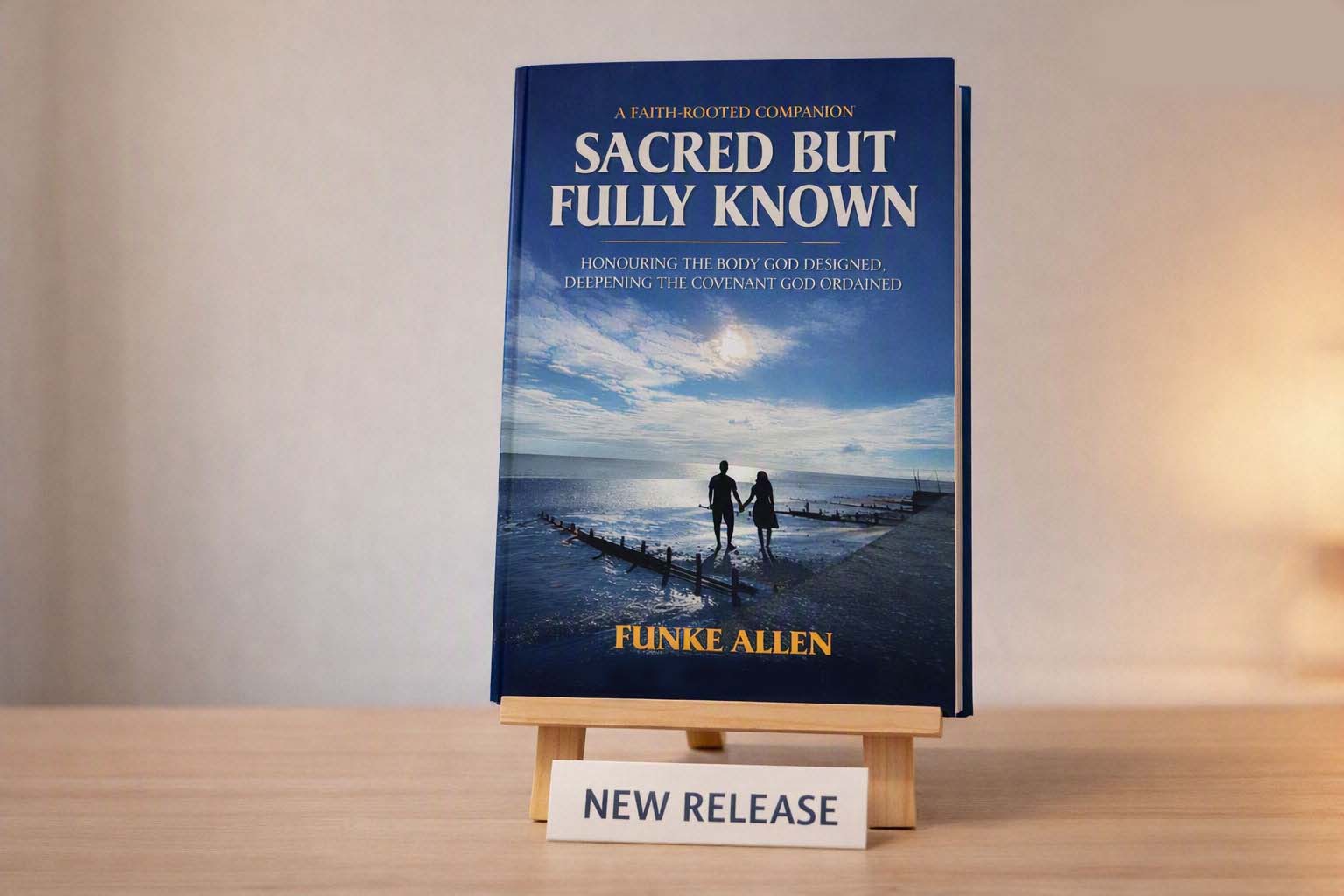
By Oluwafunke Allen
Of the four subtitle options sitting on my desk this week, this is the only one that isn’t really about the topic at all: A Faith-Rooted Guide to Sex You’re Meant to Work Through, Not Just Read. It’s a promise about the experience of reading the book, not a description of what’s inside it. That’s a different kind of subtitle, and I keep coming back to it.
Why this one is actually the most accurate
Every chapter of this book ends the same way a Reflect & Pray section, and a Couple’s Devotion meant to be worked through together, not skimmed alone. That structure wasn’t decorative. I built it because I don’t believe a book can change a marriage bed by being read once and shelved. It has to be returned to, argued with, prayed over, tried. This subtitle is the only one of the four that tells a reader the truth about what kind of book they’re picking up before they’ve paid for it.
The objection it quietly answers
I know exactly who hesitates at a 260-page book about anything: someone who has started and abandoned a dozen books like it, and already half-expects to do the same here. “You’re meant to work through it, not just read it” reframes the length before it becomes a reason to put the book back down. It isn’t asking for more of a reader’s time out of nowhere it’s telling them the length is structure, chapters meant to be lived in one season at a time, not a wall to climb in one sitting.
What worries me about it
My honest concern is that it sounds like homework before it sounds like relief, and most readers pick this book up already exhausted by the subject, not looking for another assignment. I don’t want the truest subtitle to also be the least inviting one.
The line I want you to keep
A book that asks something of you is not automatically a burden sometimes it’s the only kind of book that actually gets to keep its promise.
Sacred, but Fully Known launches October 3rd. Subscribe below to find out which one wins.
— Funke
Sacred, but Fully Known: A Faith-Rooted Companion to Intimacy in Marriage launches October 3rd, 2026. Subscribe above to follow the story, and to be first in line on launch day.
