

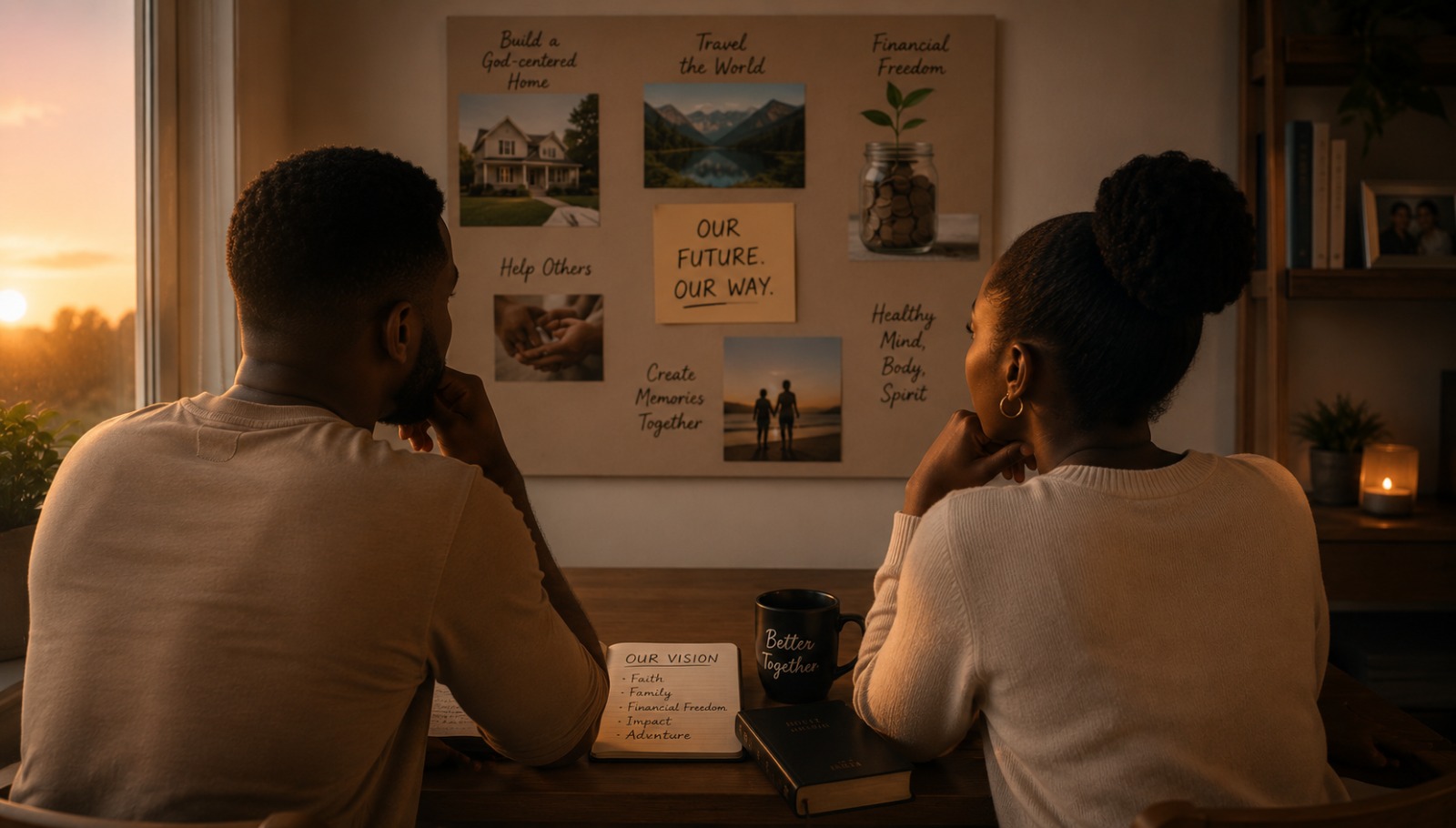
I once sat across from a couple who had spent fourteen months planning their wedding. Fourteen months. They could tell me the exact shade of their aisle runner, the backup plan for rain, the seating chart negotiations with two sets of in-laws. When I asked what kind of marriage they wanted to build, they looked at each other like I’d asked them to solve a riddle in a language they didn’t speak. They had a wedding plan. They did not have a marriage plan. Most couples don’t, and it shows up later in ways that have nothing to do with cake.
The day gets the planning, the decades don’t
A wedding has a deadline, a budget, and a hundred visible decisions, so it pulls all the planning energy in the room. A marriage has no deadline, no fixed budget, and its most important decisions are invisible how you’ll handle money, how often you’ll see each family, what you’ll do when one of you gets a job offer in another city, how you’ll fight fair when you’re exhausted and it’s midnight. Nobody hires a planner for those. Nobody puts them on a registry. So they get decided in real time, under pressure, by two people who never actually agreed
on the destination.
I’ve watched this play out in the counselling room more times than I can count: two people who love each other, arguing not because they disagree, but because they’re each quietly running their own unspoken version of “what marriage is supposed to look like,” and neither has said it out loud.
Write it down, or watch it drift
Habakkuk 2:2 says, “Write the vision, and make it plain upon tables, that he may run that readeth it.” That instruction wasn’t given so the vision could stay a pleasant feeling. It was given so it could be run with plain enough to act on, written down so it doesn’t quietly reshape itself into whatever’s convenient that week. A marriage without a written, spoken, agreed-upon vision doesn’t stay neutral. It drifts, usually toward whichever partner is louder, more anxious, or more exhausted at any given moment, and neither of you chose that on
purpose.
I ask couples a version of the same question in early sessions: if your marriage were thriving five years from now, what would that actually look like not as a mood, but as a Tuesday. Who’s doing what. What’s the rhythm. What did you decide about money, in-laws, faith practice, rest. Most couples have never said any of it out loud to each other, only to themselves, and often not even that clearly.
What a real vision conversation covers
It isn’t a vague conversation about “growing together” that’s a feeling, not a plan. A real vision conversation gets specific about the unglamorous mechanics: how you want to handle conflict when it happens, not just that you hope to avoid it. What role faith will actually play on an ordinary week, not just on Sundays. How you’ll make big decisions together by default, or divided by domain. What you’re each still carrying from your family of origin that you don’t want repeated here.
One couple I worked with discovered, twelve years in, that they’d never once discussed how they wanted to handle extended family during holidays they’d just been quietly resenting each other’s default assumptions every December since the wedding. A ten-minute conversation, had on year one instead of year twelve, would have saved a decade of low-grade tension that neither of them could name until we named it together.
Building the vision without making it a chore
Start small and make it a rhythm, not a one-time summit. Pick one Sunday evening a quarter and ask each other one real question: what’s working, what isn’t, what do we want more of. Write the answers down somewhere you’ll actually look at again not because the paper is magic, but because writing forces the vague feeling into a plain sentence you can hold each other to.
And hold the vision loosely enough to revise it. The marriage you plan for at twenty-six will need updating at thirty-six. That’s not failure that’s the vision doing its job, staying plain enough to run with as the terrain changes underneath you.
The vineyard you were given to keep
There’s a verse I come back to constantly on this exact drift, one most readers skip past because it sits inside a book they assume is only about desire. Song of Solomon 1:6 has the bride saying, “My mother’s children were angry with me; they made me the keeper of the vineyards; but mine own vineyard have I not kept.” She was put in charge of everyone else’s fields and, in the process, neglected the one that was actually hers. That is exactly what happens to a marriage without a vision. Careers, extended family, ministry, other people’s emergencies all genuinely worthy vineyards will happily consume every hour you don’t deliberately protect, and none of them will ever volunteer to hand the time back. The marriage doesn’t collapse from an attack. It quietly starves from neglect while both of you are busy tending someone else’s field.
The line I want you to keep
You didn’t just marry a person you started building a life, and a life without a plan doesn’t stay empty. It fills in with whatever’s easiest, one unexamined default at a time. Write the vision down before the drift writes it for you, and ask honestly whose vineyard has actually been getting your best hours.
Chapter Sixteen of the book, “Passing It Forward,” goes deeper into this exact tension.
Sacred, but Fully Known launches October 3rd. Subscribe below for more of this, every week.
— Funke
Sacred, but Fully Known: A Faith-Rooted Guide to Intimacy in Marriage launches October 3rd, 2026. Subscribe above to follow the story, and to be first in line on launch day.
